
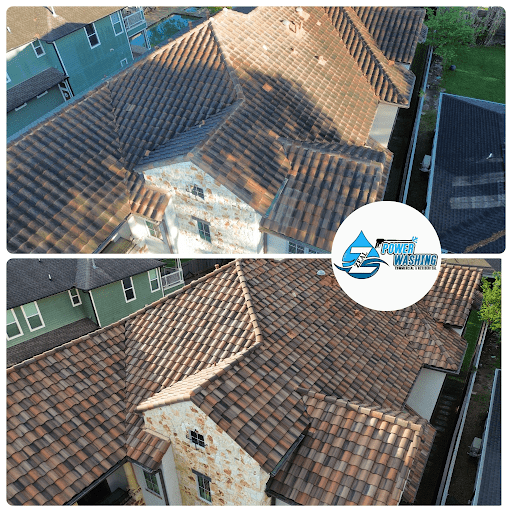
Can roof cleaning in Sugar Land actually remove ugly black streaks without damaging your shingles? The answer is yes. But the method matters more than most homeowners realize. When biological stains are treated at the source instead of blasted away with pressure, your roof stays cleaner longer, runs cooler, and keeps its protective strength for years.
Many Sugar Land homeowners assume those dark roof stains come from freeway pollution, wildfire ash, or city dust. That’s usually not the real cause. Those streaks are alive. And if left untreated, they can quietly shorten the life of your roof while increasing summer cooling costs at the same time.
Before removing them, it helps to understand exactly what’s growing up there.
What Are the Black Streaks on Sugar Land Roofs, and Are They Actually Harmful?
Those black lines running across shingles usually aren’t soot or dirt. They’re most often Gloeocapsa magma, a hardy form of cyanobacteria that thrives in warm, humid climates. Once airborne spores land on a roof, they begin feeding on one of the most important ingredients inside modern asphalt shingles: limestone filler.
How Does Gloeocapsa Magma Damage Asphalt Shingles?
Modern shingles are designed to handle years of sunlight, rainfall, and temperature swings. What they’re not designed for is bacteria feeding on their structure.
As Gloeocapsa magma spreads, it slowly consumes the limestone particles inside shingles. That weakens the material, reduces surface protection, and speeds up aging. The process happens gradually. By the time black streaks become highly visible, the biological colony has often been active for much longer than homeowners realize.
Why Do Black Streaks Make Your Roof Run Hotter?
Dark surfaces absorb heat. That’s why asphalt parking lots feel hotter than sidewalks on a summer afternoon.
Roof stains work the same way. Black streaks create concentrated heat zones across your shingles, reducing their ability to reflect sunlight. That trapped heat moves directly into your attic, forcing your cooling system to work harder.
Why Does Sugar Land’s Climate Create the Perfect Environment for Roof Algae?
Sugar Land doesn’t get tropical rainfall. Yet roof algae grows aggressively here. The reason comes down to geography.
Evening humidity from the Gulf Coast often settles across Fort Bend County, creating moisture pockets throughout neighborhoods near Oyster Creek, First Colony, and communities stretching toward the Brazos River corridor.
That trapped moisture lingers long after sunset.
Roofs near Sugar Land Memorial Park, neighborhoods around Oyster Creek Park, and mature tree-lined sections of Riverstone often stay damp longer than surrounding properties.
That’s why homes just a few blocks apart can age very differently.
Why Do Tree-Lined Neighborhoods See Faster Roof Staining?
Mature live oaks, cedar elms, crepe myrtles, and dense landscape canopies block direct sunlight. Less sunlight means slower drying. Slower drying creates ideal conditions for algae spores to anchor, multiply, and spread.
By the time most homeowners search for soft wash near them, the biological growth has usually been active for months, sometimes years. Early identification makes a major difference.
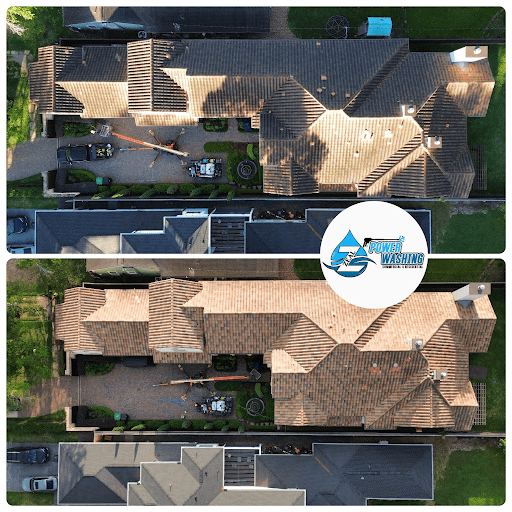
Can Pressure Washing Remove Roof Stains—or Cause More Damage?
Pressure washing can remove visible stains. It can also permanently damage your roof. That’s the part many homeowners never hear.
Using high PSI on asphalt shingles often strips away the protective mineral granules that shield roofing materials from UV exposure. Once those granules are removed, they don’t regenerate.
That’s why roof washing in Sugar Land should never begin with force. It should begin with understanding what the roof can safely handle.
What Happens When High PSI Hits Asphalt Shingles?
High-pressure cleaning can create several problems at once. Water can force itself beneath shingles. Seal strips can loosen. Protective granules can wash away. And older roofs, especially homes in established communities like Sugar Creek or early sections of First Colony, may already have weathered surfaces that can’t tolerate aggressive cleaning.
This is one reason the Asphalt Roofing Manufacturers Association discourages pressure-based cleaning for asphalt roofing systems.
Is Roof Pressure Washing Ever Worth the Risk?
For most residential asphalt roofs, the answer is no. That’s why searches for roof pressure washing in Sugar Land often lead homeowners toward a better alternative once they understand the warranty risks.
A clean roof should add years of life, not remove them.
Why Has Soft Washing Become the Safer Way to Clean Roofs?
The roofing industry has shifted away from pressure. Chemistry now does the heavy lifting. That’s what makes soft wash roof cleaning so effective.
Instead of blasting algae off the surface, soft washing targets the biological root system using biodegradable cleaning agents and controlled dwell time. The stain disappears because the organism dies, not because it was forced off. That difference changes everything.
What Happens During a Professional Soft Wash?
Every roof responds differently, but the process usually follows five clear steps.
Step 1: Structural Assessment
Before anything touches the roof, shingles, flashing, valleys, and exposed fasteners are checked for weak points. Older Craftsman homes often need extra care due to brittle materials.
Step 2: Landscape Protection
Nearby rose beds, azaleas, crepe myrtles, boxwoods, and landscaped garden beds are thoroughly saturated before treatment begins.
Step 3: Solution Application
A biodegradable surfactant is applied across affected sections. This begins breaking down the algae at the root.
Step 4: Dwell Time
The solution stays in place long enough to loosen the biological grip on limestone granules.
Step 5: Low-Pressure Rinse
A gentle rinse removes debris while preserving every layer of shingle protection. This is where soft washing service delivers results that surface cleaning simply can’t match.
DIY Cleaning vs Professional Soft Washing: What Actually Lasts Longer?
DIY roof cleaning often looks cheaper upfront. In the long term, it rarely delivers the same protection.
|
Feature |
DIY Cleaning |
Professional Soft Wash |
|
Method |
Hose or pressure washer | Low-pressure chemical wash |
|
Safety |
Ladder risk |
Safety-rigged technicians |
|
Chemical Quality |
Consumer products |
Professional-grade solutions |
|
Results |
Around 6 months |
2–3 years |
| Warranty Protection | Potential risk |
ARMA-compliant |
The biggest mistake usually isn’t waiting too long. It’s cleaning the roof the wrong way first.
What Does Roof Cleaning Cost in Sugar Land?
Roof cleaning in Sugar Land typically ranges between $400 and $1,100.
Several factors affect the final price:
- Roof size
- Roof slope
- Access difficulty
- Amount of biological growth
- Safety equipment requirements
Compared with a full replacement, cleaning often becomes the more practical choice.
That’s why roof soft washing in Sugar Land has become a preventative investment rather than a cosmetic upgrade.
When Is the Best Time of Year for Roof Cleaning in Sugar Land?
Late spring and early fall usually offer the best conditions.
- Temperatures are stable.
- Moisture levels are manageable.
- And cleaning solutions have enough dwell time to work efficiently.
That said, visible algae shouldn’t wait for a perfect season. Biological growth doesn’t pause. Neither does roof wear.
Final Thoughts
A roof in Sugar Land doesn’t usually fail from one major event. It wears down through sunlight, trapped moisture, biological growth, and years of overlooked maintenance. Clean it early, clean it correctly, and your roof often delivers the lifespan it was built for.
If you’re still comparing cleaning methods, our Roof Cleaning Company Guide breaks down what separates safe roof care from shortcuts that can shorten a roof’s life.
And when Sugar Land homeowners want long-term roof protection instead of temporary stain removal, many turn to Zeal Power Washing for a science-first approach built around preservation.
Frequently Asked Questions
What is an average price for roof cleaning?
Most Sugar Land homeowners spend between $400 and $1,100 depending on roof size, slope, staining, and accessibility.
What is the average cost to soft wash a roof?
Soft washing typically falls within the same range, although larger or heavily shaded properties may cost more.
Is professional roof cleaning worth it?
Yes. Professional cleaning removes algae at the biological level, protects shingles, and often delays costly repairs or replacement.
What is the 25% rule in roofing?
The 25% rule generally refers to repair limits. If more than 25% of a roof is damaged within a year, full replacement may be required under local codes.
What time of year is best for roof cleaning?
Late spring and early fall usually provide ideal cleaning conditions, although active algae should be addressed as soon as possible.
Is it okay to pressure wash a roof?
For asphalt shingles, no. High pressure can strip granules, force moisture under shingles, and void manufacturer warranties.
What are common roof cleaning mistakes?
Using pressure washers, skipping roof inspections, applying household bleach, ignoring landscaping protection, and cleaning brittle shingles without safety planning.

Trey is the owner of Zeal Power Washing, a Houston-based exterior cleaning company specializing in residential and commercial services. With over 8 years of experience, he focuses on pressure washing, concrete cleaning, window cleaning, and surface restoration.
He is committed to delivering reliable, high-quality results while helping property owners maintain and protect their investments.