
Is commercial pressure washing runoff regulated in Houston? Yes. City storm drains connect straight to local bayous and Galveston Bay with no treatment in between. Wash water carrying oil, grease, or chemical residue counts as an illicit discharge under the law. Commercial pressure washing in Houston has to protect you legally, not just make the building look good.
Houston’s Storm Drains Aren’t What Most Property Owners Think
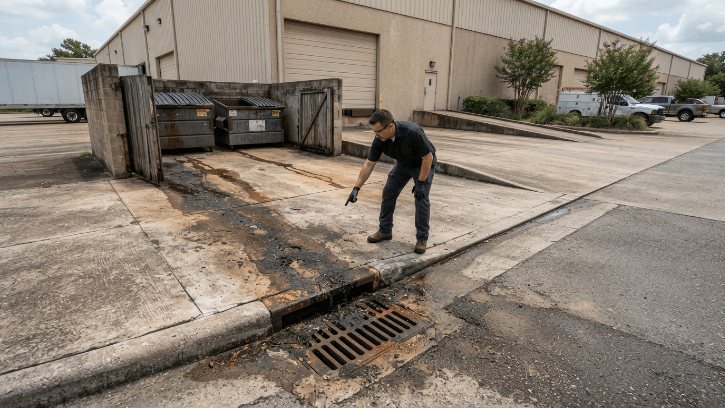
A storm drain is not the same as a sanitary sewer. Sanitary sewer lines carry wastewater to a treatment plant. Storm drains carry rainwater and anything else that lands on the pavement straight into local creeks and bayous, untreated.
Anything rinsed off a parking lot, loading dock, or dumpster pad during commercial pressure washing on Houston properties can pollute a waterway if it’s not handled correctly. Cities enforce this through their municipal separate storm sewer system (MS4) permits. Under the federal Clean Water Act, discharging pollutants into a water source without a permit is against the law. See the EPA’s own breakdown of these rules here: EPA NPDES Permit Basics.
We check the dumpster pad or loading dock first on nearly every commercial walkthrough. It’s almost always the spot with the most staining, and it usually points straight at a drain.
The Nuance Most Articles Skip
Most guides on this topic stop at “hire an insured company.” That advice misses something. Hiring a vendor does not automatically transfer your liability to them.
As the property owner, your name is on the citation if runoff from your Houston office building pressure washing job reaches a storm drain, even if a crew you hired caused it. Your vendor’s insurance might help cover the cost after the fact. The fine, the inspection, and the reputational hit land on you first. Ask a vendor how they handle runoff, not just whether they carry insurance.
What Compliant Cleaning Actually Looks Like
Here’s a simple comparison of what we typically see in the field versus a properly contained job:
| Factor | Uncontained Day-Rate Crew | Documented Compliant Process |
| Runoff handling | Flows toward the nearest drain or gutter | Contained, vacuumed, and filtered on-site |
| Oil & grease | Rinsed off with cold water and soap | Broken down with hot water and proper extraction |
| Chemicals | Generic bleach blends | Biodegradable, surface-appropriate detergents |
| Site safety | No barriers or signage | Wet-floor barriers and a marked work zone |
| Paper trail | None | Disposal method documented and kept on file |
Choosing a Houston power washing company that follows the right column keeps your property out of a compliance headache down the line.
How We Handle Wastewater, Step by Step
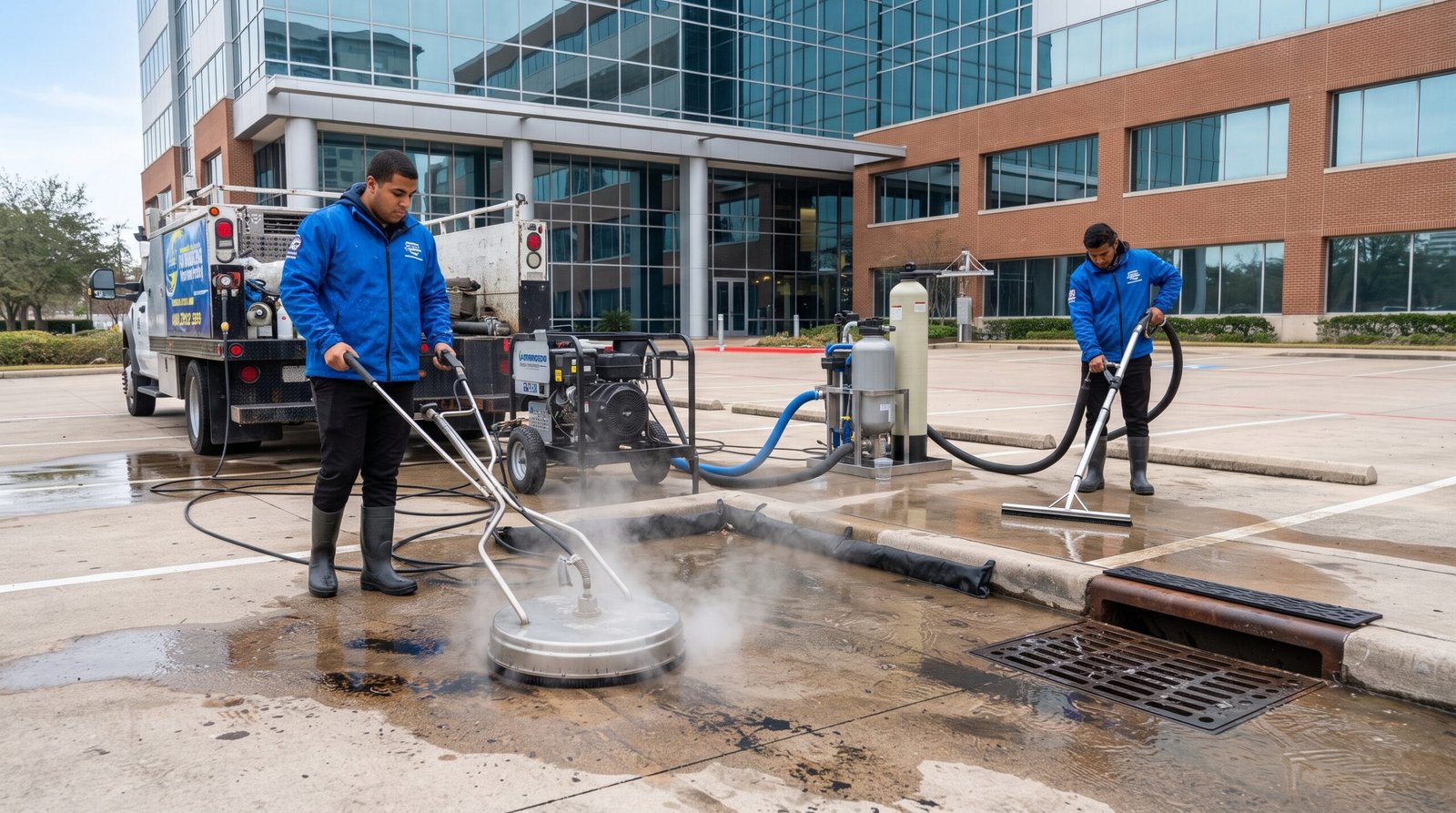
Here’s the process we follow on commercial jobs, especially high-traffic areas like parking structures or loading zones.
- We seal the site before any water touches the ground. Before we turn a hose on, we locate every nearby storm drain and cover it. Berms and drain covers keep water from reaching an open drain.
- We break down grease with heat, not harsh chemicals. Hot water cuts through oil and grease more effectively than cold water and soap. This lets us avoid dumping aggressive chemicals onto your pavement.
- We capture the water instead of letting it pool. Rather than letting dirty water sit and evaporate or run off, we use extraction equipment to pull it up as we clean.
- We filter it before disposal. Recovered water passes through a filtering step to separate sludge and oils from the rest, so what gets disposed of meets the standard for legal disposal.
Any professional power washing Houston business you hire should be able to walk you through a process like this. If they can’t explain where the water goes after the job, that’s worth a second look.
The Liability You’re Carrying Beyond Fines
Fines aren’t the only risk. Algae and mold buildup near entryways is one of the most common hazards we flag during commercial walkthroughs, especially on walkways that don’t get much direct sun and stay damp.
Slick, green patches near doors and stairwells are a slip-and-fall risk under general premises liability. Regular cleaning keeps your entrances safe for employees, tenants, and visitors, not just clean-looking.
We’ve also written about what separates a serious operator from a weekend side hustle. Read more in our post on what makes the best power washing company stand out from amateurs. Insurance, equipment, and process matter more than price alone.
A Quick Self-Audit Before You Hire Anyone
Before you bring in any pressure washing companies Houston, Texas has to offer, walk your property line and check a few things:
- Do you see dark staining or an oily sheen trailing toward a storm drain?
- Can the vendor describe how they capture and dispose of wash water?
- Do they carry general liability insurance and workers’ comp?
- Will they provide any documentation of their process if you ask?
If the answer to any of these is “not sure,” ask more questions before scheduling the job.
We Also Serve Sugar Land and Missouri City.
Property owners outside Houston proper run into the same drainage rules. We regularly handle commercial power washing services Houston businesses need, along with jobs in Sugar Land and Missouri City, TX. Both areas have a lot of retail centers, office parks, and HOA-managed properties with the same storm drain layout as the city.
Ready for a Compliance Walkthrough?
If you’re not sure where your property stands, reach out to schedule a walkthrough and estimate. We’ll point out anything worth addressing before it becomes a bigger issue.
Frequently Asked Questions
Who actually needs commercial pressure washing services?
Any business with outdoor traffic, including retail centers, office buildings, restaurants, parking garages, and HOAs, benefits from regular cleaning to manage grease, algae, and grime buildup before it becomes a safety or compliance issue.
How often should a commercial property be pressure washed in Houston?
Most properties do well with a cleaning every 6 to 12 months. High-traffic areas like loading docks or restaurant patios may need it more often due to grease buildup.
Is it illegal to pressure wash into a storm drain?
Yes. Letting wash water containing oil, grease, or chemicals reach a storm drain is considered an illicit discharge under the Clean Water Act and local MS4 rules.
How much does commercial pressure washing cost in Houston?
Pricing depends on square footage, surface type, and how much grease or staining needs removal. Most companies provide a free walkthrough and quote before starting work.
Can I be fined if I hire a vendor and they cause the violation?
Often, yes. As the property owner, you’re typically the party of record the city holds responsible, even if the runoff came from a vendor’s equipment.

Trey is the owner of Zeal Power Washing, a Houston-based exterior cleaning company specializing in residential and commercial services. With over 8 years of experience, he focuses on pressure washing, concrete cleaning, window cleaning, and surface restoration.
He is committed to delivering reliable, high-quality results while helping property owners maintain and protect their investments.