
Most exterior cleaning failures don’t start with the wrong equipment. They start before a single drop of water hits the surface. Safe, lasting results on concrete and siding come down to five preparation steps that most crews and nearly every DIY attempt skip entirely.
Pressure washing in Houston is not just about blasting dirt off a surface. Houston’s humidity sits consistently above 70%, and that creates the kind of persistent algae, mold, and grime buildup that punishes surfaces when prep is ignored. Here’s exactly what proper preparation looks like on the ground.
Why Does the Wrong Pressure Still Ruin Clean-Looking Surfaces?
Here’s something most articles won’t tell you: surface damage from pressure washing often doesn’t look like damage right away.
A homeowner finishes a DIY job. The driveway looks clean. The siding looks fine. Then, three weeks later, faint streaks appear permanently etched into the concrete, and a chalky film shows up on the vinyl that wasn’t there before. The damage was done. It just took time to show.
Most people assume the job went fine. It didn’t.
Why Siding Takes Hidden Damage First
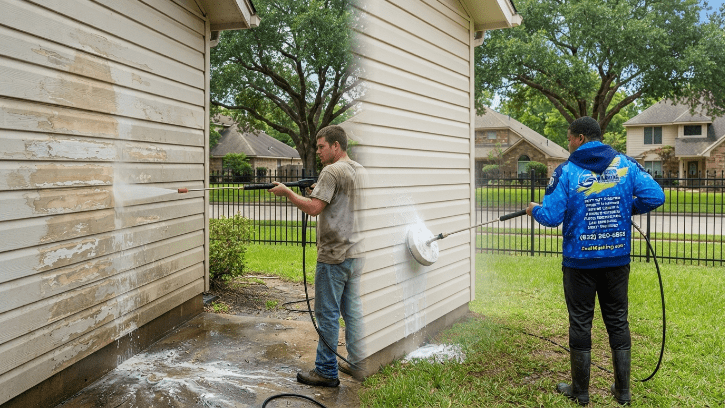
Siding materials, whether vinyl, stucco, or fiber cement, aren’t built to handle water impacts above 1,500 PSI. High-velocity water doesn’t clean the protective coating on your siding. It strips it. What’s left behind oxidizes faster, holds more grime, and fades unevenly.
This is why pressure washing services in Houston on siding should always use a soft-wash approach, not a high-pressure wand.
Why Concrete Is More Fragile Than It Looks
Concrete is porous. It’s essentially a mineral sponge. Running a standard narrow wand tip across a driveway creates uneven gouges in the surface layer known as “zebra striping.” That top cream coat doesn’t grow back. No future cleaning fixes it.
A lot of homeowners assume more pressure means a better clean. That assumption is what causes most of the property damage we see on consultation visits.
If you’re still weighing whether to go DIY or hire out, this breakdown of the best power washing company walks through what actually separates a qualified crew from a rental and a garden hose.
What Does a Real Pre-Job Prep Protocol Actually Look Like?
Whether it’s a Sugar Land driveway or a commercial strip off the I-10 corridor, the same five-step sequence runs before any equipment turns on. Not sometimes. Every time.
Step 1: Is Every Electrical Point Sealed Before Water Gets Near It?
Houston homes are loaded with external outlets, smart doorbells, security cameras, and motion sensors. Every single one is a water risk.
Before any water runs, every exposed external outlet gets sealed with heavy-duty waterproof tape. Water finding an unsealed outlet can cause short circuits, arcs, or tripped breakers. In the worst cases, it damages the device entirely.
This step takes ten minutes. Skipping it can cost hundreds.
Step 2: Are the Plants and Landscaping Pre-Soaked?
Even biodegradable cleaning solutions can burn ornamental shrubs, grass edges, and flowerbeds if applied to dry plants.
Before any solution hits the surface, all perimeter landscaping gets a thorough pre-soak with clean water. This fills the root network with fresh hydration, which acts as a natural buffer against chemical runoff.
House washing in Houston almost always involves lush St. Augustine grass and established garden beds close to the structure. Protecting them isn’t optional. It’s part of the job.
Step 3: Are the Windows Locked and Door Thresholds Sealed?
This is one of the most overlooked prep steps, even among professional crews.
Gaps that look sealed on a dry day open under lateral water pressure. Worn weatherstripping around windows and doors lets high-velocity water slip through. We’ve seen water show up inside a wall cavity on a job where the siding looked completely intact from the outside.
Every window gets locked before work starts. Locking compresses the seal. Mail slots get covered. Dry towels go along interior door sills to catch any unexpected moisture that gets through.
Step 4: Has the Siding Been Inspected for Structural Weak Points?
Washing over a loose vinyl panel or fractured stucco board doesn’t clean it. It forces water directly into the wall cavity behind it.
That’s how a power washing service in Houston that was supposed to improve your home ends up creating hidden mold growth inside the wall. We walk the full perimeter before starting, tape down any loose seams, and work around damaged sections rather than washing over them.
If a section needs repair, that gets flagged for the homeowner before the job continues.
Step 5: Have Oil Stains and Organic Growth Been Pre-Treated First?
This is the step that makes the biggest difference in how long results actually last, and it’s the one most DIY attempts skip entirely.
Applying raw high pressure to motor oil stains or deep black algae (Gloeocapsa magma) doesn’t lift them. It strips the surrounding surface instead, spreading the stain or etching the concrete around it.
The right approach is pre-treatment. Eco-friendly surfactant solutions get applied first. They emulsify heavy grease and break down the biological root structure of the algae before the main rinse starts. On driveway cleaning and concrete cleaning jobs, this pre-treatment stage is what separates a surface that stays clean for two years from one that re-stains in six weeks.
Does It Matter Whether You Use a Pressure Washer or a Soft-Wash System?
For most residential surfaces, yes, significantly.
The Asphalt Roofing Manufacturers Association (ARMA) states directly that pressure washing asphalt shingles causes granule loss and likely premature roof failure. Their published guidance recommends low-pressure chemical application as the only approved method for roof cleaning on asphalt surfaces. That’s an industry authority position, not a preference.
Here’s how the two approaches compare in practice:
| Attribute | DIY Rental Unit | Professional Soft-Wash System |
| Pressure Control | Fixed, high-PSI wand | Fully adjustable dual-system calibration |
| Cleaning Solutions | Store-bought chemical blends | Biodegradable, targeted sanitizing solutions |
| Siding Safety | High risk of paint peeling, water injection | Low-pressure application, surface protected |
| Concrete Results | Uneven striping, micro-fractures possible | Rotary surface cleaner, uniform coverage |
| Landscape Impact | Chemical runoff risk | Active pre-saturation, continuous rinse protocol |
For commercial pressure washing in Houston, the stakes are even higher. Larger surface areas mean more exposure to damage if pressure calibration is off, and commercial surfaces often carry liability concerns that residential jobs don’t.
What About Services Beyond the Wash Itself?
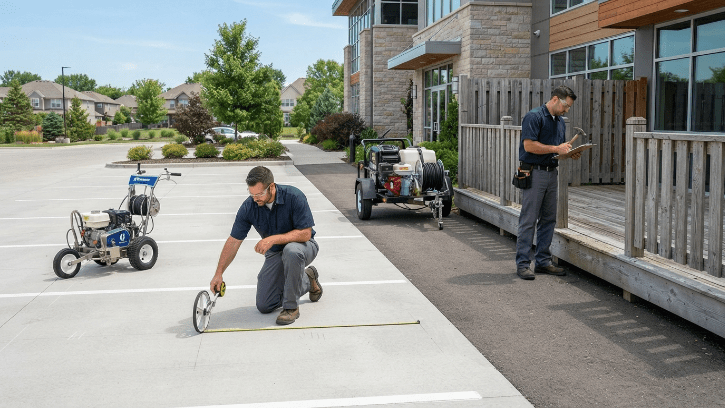
The same prep principles carry through to every exterior service, not just straight pressure washing.
Line striping, for example, requires clean, fully dry concrete for paint to bond correctly. If the concrete cleaning step is rushed or the surface isn’t properly pre-treated, line striping results deteriorate faster and lose visibility sooner. The prep work upstream directly affects the outcome downstream.
Fence and deck surfaces go through the same Step 4 structural inspection before any water runs. Soft or weathered wood that looks solid can hold moisture after washing and accelerate rot if it wasn’t identified first.
The Real Issue Isn’t the Equipment. It’s the Order of Operations.
Most exterior cleaning mistakes are prep mistakes. The equipment is almost always fine. What goes wrong is the sequence: skipping electrical sealing, skipping the soak, skipping the structural walk-through, and going straight to high pressure on surfaces that need chemistry first.
These five steps add time to a job. They’re worth it. At Zeal Power Washing, they’re non-negotiable on every job across the Houston area because the surface requires it.
For a free, no-obligation estimate: Call 832-260-5555 or visit zealwashing.com/estimate.
Frequently Asked Questions
How do you pressure wash a house without damaging it?
Use soft-wash techniques below 1,500 PSI on siding, pre-treat any organic growth with biodegradable solutions, and always inspect the structure for loose panels or weak points before any water runs. Starting with chemistry rather than raw pressure is what protects the surface.
How much does a pressure washer cost to rent in Houston?
Rental units at Home Depot, Lowe’s, or Sunbelt Rentals typically run $60 to $120 per day in the Houston area. Consumer rental units run at fixed PSI without flow calibration, which makes them a real risk on siding, roofs, or stained concrete.
How much does it cost to pressure wash a driveway?
Most Houston driveway cleaning jobs range from $100 to $250 depending on size and stain severity. Driveways with set-in oil stains that require chemical pre-treatment may sit toward the higher end of that range.
How do you pressure wash a deck safely?
Keep pressure between 500 and 800 PSI, use a wide-angle nozzle, and run a structural inspection first. Washing over soft or rotting wood forces moisture into the grain and speeds up decay, so the inspection step isn’t optional on wood surfaces.
Where can I rent a pressure washer near me in Houston?
Home Depot, Lowe’s, ZealPower Washing, and Sunbelt Rentals all carry pressure washer rentals across the Houston metro. For anything involving siding, roofs, stained concrete, or wood surfaces, professional soft-wash services typically deliver safer and longer-lasting results than rental units.

Trey is the owner of Zeal Power Washing, a Houston-based exterior cleaning company specializing in residential and commercial services. With over 8 years of experience, he focuses on pressure washing, concrete cleaning, window cleaning, and surface restoration.
He is committed to delivering reliable, high-quality results while helping property owners maintain and protect their investments.