
The most effective way to handle concrete cleaning in Manvel is to treat the stain’s chemistry first, then apply controlled water pressure. Blasting with a wand alone removes the surface layer but leaves algae roots alive inside the concrete’s pores, and they grow back within weeks.
We’ve seen the same pattern across Manvel and Pearland: pressure without the right chemistry makes stains come back faster. This guide covers what actually works, why some DIY approaches cause permanent damage, and how to keep your concrete clean longer.
Why Is Manvel Concrete So Hard to Keep Clean?
Manvel sits in one of the most humidity-heavy corridors in Texas. Average humidity hovers around 68%, and the area gets over 50 inches of rain per year. That’s not a minor detail. It’s the root cause of almost every stubborn concrete stain we see.
Your Concrete Is a Sponge (And That’s the Real Problem)
Concrete looks solid. But at a microscopic level, it’s highly porous, more like a stone sponge than a sealed surface.
In Manvel’s humid climate, a cyanobacterium called Gloeocapsa magma thrives inside these pores. It forms the black streaks and dark patches you see on driveways, patios, and sidewalks. According to MicrobeWiki (Kenyon College), Gloeocapsa magma develops a dark UV-protective sheath around itself, which is exactly what creates those near-permanent-looking black stains.
A standard pressure wand only shears off the top layer of the stain. The living root colonies stay embedded inside the pores. Within 2 to 3 weeks, the stain is back, often darker than before.
The Live Oak Tannin Problem Nobody Mentions
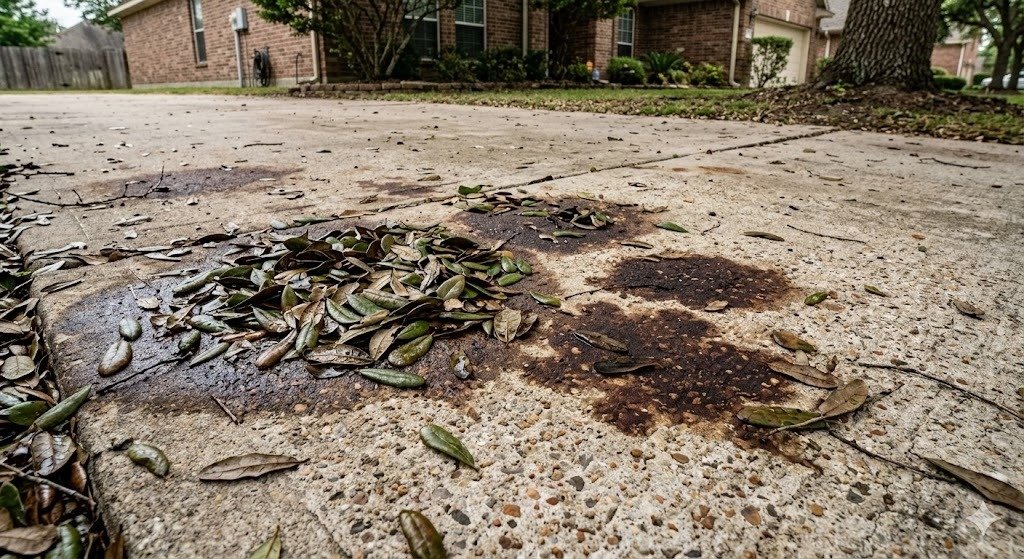
There’s a second culprit specific to Manvel and the wider Pearland area: Live Oak trees.
Fallen leaves pool on driveways and leak acidic tannins into the concrete surface, leaving dark brown stains that behave nothing like algae. High-pressure water won’t lift them because the problem is chemical, not physical.
Tannin stains need an oxalic acid-based cleaner applied first. Only after that does rinsing actually work. Skip this step and you’re just moving the stain around.
What Actually Cleans Concrete (And What Quietly Damages It)
There’s no single answer. The right cleaner depends entirely on the type of stain:
- Algae, mold, and mildew: Sodium hypochlorite solution. This kills spores at the root level inside the pores, not just at the surface.
- Oil and grease stains: Alkaline degreaser, ideally with hot water. The heat and chemistry together break the oil bond. This is the answer to “what cleans oil off concrete” that most guides skip.
- Live Oak tannin stains: Oxalic acid-based cleaner. Treat the chemistry first, then rinse.
- Sealed or interior concrete floors: A pH neutral cleaner for concrete floors is the safest choice. Acidic or highly alkaline cleaners strip sealers and cause surface etching over time.
- General maintenance cleaning: Cleaning stained concrete with a mild detergent and a surface cleaner attachment works well as part of an annual routine.
One cleaner to avoid: muriatic acid. Some budget operators use it because it produces fast visual results. But it weakens the structural matrix of residential concrete over time and can void builder warranties that specify non-destructive cleaning methods only.
Can a Surface Cleaner Damage Concrete? Yes, and Here’s How
This is the most under-discussed risk in every DIY guide.
When you use a hand-held pressure wand, the distance between the nozzle and the concrete shifts as you move. Even slight variation etches uneven grooves into the concrete’s “cream coat,” the smooth factory-finish top layer. The result is what professionals call tiger stripes or zebra stripes. They’re permanent, and fixing them means full resurfacing at $2,000 to $5,000.
Even at safe PSI levels, an inconsistent wand arc causes the same problem. A rotary surface cleaner solves this by spinning at a fixed, calibrated distance for a uniform finish every time.
DIY Rental vs. Professional Concrete Cleaning: A Direct Comparison
Here’s a side-by-side breakdown based on what we see on the ground:
| Cleaning Metric | Weekend DIY Wand | Professional Protocol |
| Cleaning Consistency | Uneven. Risks permanent tiger stripes. | Uniform finish via rotary surface cleaner. |
| Algae Treatment | Removes surface layer. Roots survive. | Sodium hypochlorite pre-treatment kills spores at root. |
| Structural Protection | Risks etching the cream coat. | Controlled, warranty-safe PSI. |
| Surrounding Landscaping | High risk of chemical burn on turf. | Adjacent lawn pre-drenched before any chemical contact. |
| Result Longevity | Stains return in 2 to 3 months. | Post-treatment keeps surfaces clean 3x longer. |
One detail worth noting for Manvel homeowners: St. Augustine grass is sensitive to chemical runoff. The right approach is to pre-drench all adjacent turf and flower beds with clean water before any cleaning solution is applied. It’s a simple step that most DIY attempts skip.
For a deeper look at restoring different surface types, see our earlier post: Concrete Cleaning Tips: How to Restore Dirty Driveways
HOA Compliance and Warranty Safety: Two Things Worth Knowing
Will a Dirty Driveway Get You an HOA Fine?
Yes, it can. Neighborhood associations across the Manvel and Pearland corridor issue notices for visibly stained driveways and mold-covered sidewalks. A single concrete cleaning service visit typically resolves compliance issues in one afternoon.
Why Cheap Acid Cleans Are a Long-Term Risk
Muriatic acid is common in the budget segment of the market. It delivers a fast-looking clean, but it degrades the concrete matrix, makes surfaces more porous over time, and can conflict with builder warranty language. EPA-certified, biodegradable detergents are the safer standard, especially in Manvel, where runoff feeds into local bayou drainage.
How Much Does Concrete Cleaning Cost in Manvel?
Here’s what current pricing data shows:
- Standard concrete cleaning: $0.29 to $0.54 per square foot (Homewyse, January 2026, sourced from Harvard University JCHS Homeowner Expenditures data)
- Typical 2-car driveway (around 650 sq ft): $180 to $350
- Surfaces up to 1,600 sq ft: Approximately $950
- DIY rental cost: $40 to $100 per day. But if striping damage occurs, resurfacing runs $2,000 to $5,000.
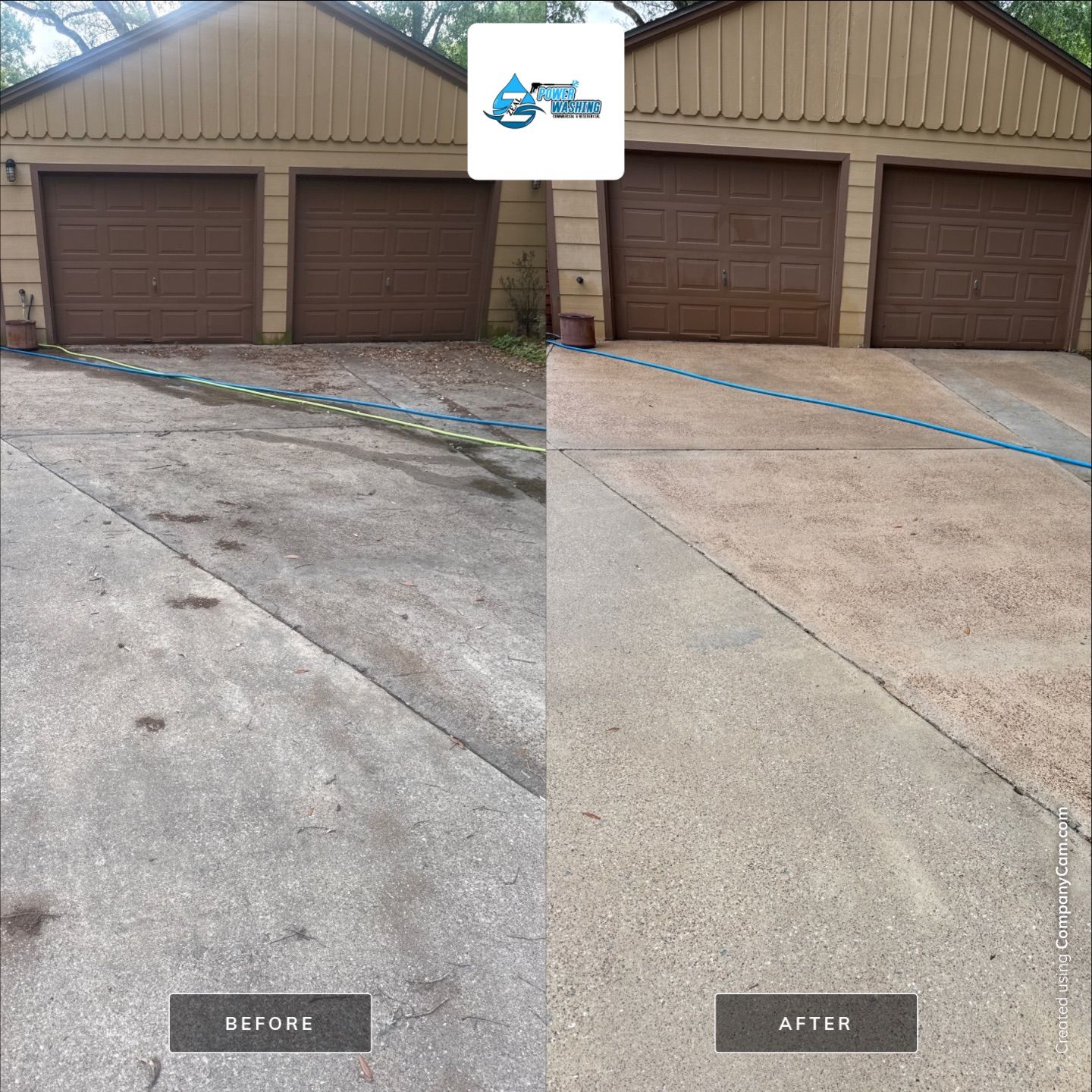
Bundling concrete cleaning with house washing or fence cleaning often lowers the per-service cost. If you’re planning to seal the concrete, scheduling both in the same visit improves adhesion and saves money.
Call or text 832-260-5555 or visit zealwashing.com for a free estimate on concrete cleaning services in Manvel and surrounding areas.
Frequently Asked Questions
What cleans concrete most effectively?
The best cleaner depends on the stain type. Sodium hypochlorite works for algae and mold. Alkaline degreaser handles oil. Oxalic acid treats tannin stains from organic debris. A pH neutral cleaner is right for sealed or interior concrete floors. One product doesn’t cover all categories.
What cleans oil off concrete?
An alkaline degreaser with hot water is the most effective option. For fresh spills, dry dish soap applied directly and left to sit for 30 minutes before rinsing can work. Old, set-in oil typically needs a professional-grade degreaser to fully break the bond.
Can a surface cleaner damage concrete?
Yes. A hand-held wand at inconsistent distances permanently etches the cream coat, leaving tiger stripes that can’t be cleaned away. Rotary surface cleaners used by professionals distribute pressure evenly across the surface, which prevents this type of damage entirely.
How much does concrete cleaning cost in the Manvel area?
Professional cleaning concrete services in this area typically run $180 to $350 for a standard driveway. Cost increases with square footage, stain severity, and added services like sealing. Free estimates are available, so there’s no guesswork upfront.
How often should I clean my concrete patio or driveway in Manvel?
At minimum, once a year. Manvel’s humidity and Live Oak leaf cycles create the right conditions for algae and tannin buildup year-round. Properties with heavy tree cover or near bayou drainage typically benefit from twice-yearly cleaning to stay ahead of it.

Trey is the owner of Zeal Power Washing, a Houston-based exterior cleaning company specializing in residential and commercial services. With over 8 years of experience, he focuses on pressure washing, concrete cleaning, window cleaning, and surface restoration.
He is committed to delivering reliable, high-quality results while helping property owners maintain and protect their investments.